
Serving: Muskegon, Oceana, Ottawa, Newaygo Counties

From Permits to Plumbing: The True Cost of Septic Installation Near Ottawa County, Michigan
Septic Installation Near Ottawa County, Michigan: What “Total Cost” Really Means
If you are building or replacing a septic system near Ottawa County, you probably have one big question: “What is this actually going to cost me?” You might feel unsure because friends tell different stories. One neighbor says it was simple. Another says it took weeks and cost more than expected. We get it. The truth is that “total cost” is not just one number. It is a stack of decisions, steps, and local rules that all add up.
We are Ryerson Brothers Excavating, based in Muskegon County and serving Muskegon, Oceana, Ottawa, and Newaygo Counties. We are not a huge firm. We are a focused team that customizes each job to the site, soil, and the way you plan to live in your home. Our goal here is simple: explain the parts of the price in plain language so you can plan with confidence and avoid surprises.
Permit Fees and Local Rules in Ottawa, Muskegon, Oceana, and Newaygo Counties
Every county along the lakeshore runs on permits and inspections. Those permit fees vary, but the big idea is the same: your design must match your soil and meet health code. Permits usually cover the review of your site plan, system design, and final inspection. If your property has wetlands, high groundwater, or tight setbacks, the paperwork can take more coordination. When you budget, set aside money for permit applications and any needed revisions. This is one area where local experience helps, because clean submittals move faster and save you return trips.
Soils, Perc Tests, and Site Evaluation: The First Cost Drivers
Soil is destiny for septic systems. A perc test and site evaluation tell us how well water moves through your soil. Sandy soils often allow simpler systems. Heavy clays, high groundwater, or shallow bedrock push the design toward pressure distribution or a mound. That shift changes materials, excavation needs, and labor time. Think of the perc test as your map. It is one of the smallest dollar line items but it controls many bigger ones downstream.
Septic System Design Options and How They Change Your Budget
Design turns site data into a real plan. It shows tank size, pipe sizes, pump needs, drain field layout, and setbacks. A well-done design saves money in two ways. First, it prevents rework. Second, it matches the system to your daily use so it lasts. Homes with more bedrooms, accessory dwelling units, or plans for future finishing space often need larger tanks or fields. That is not “nice to have.” That is code. We design for your today and your tomorrow so you do not pay twice.
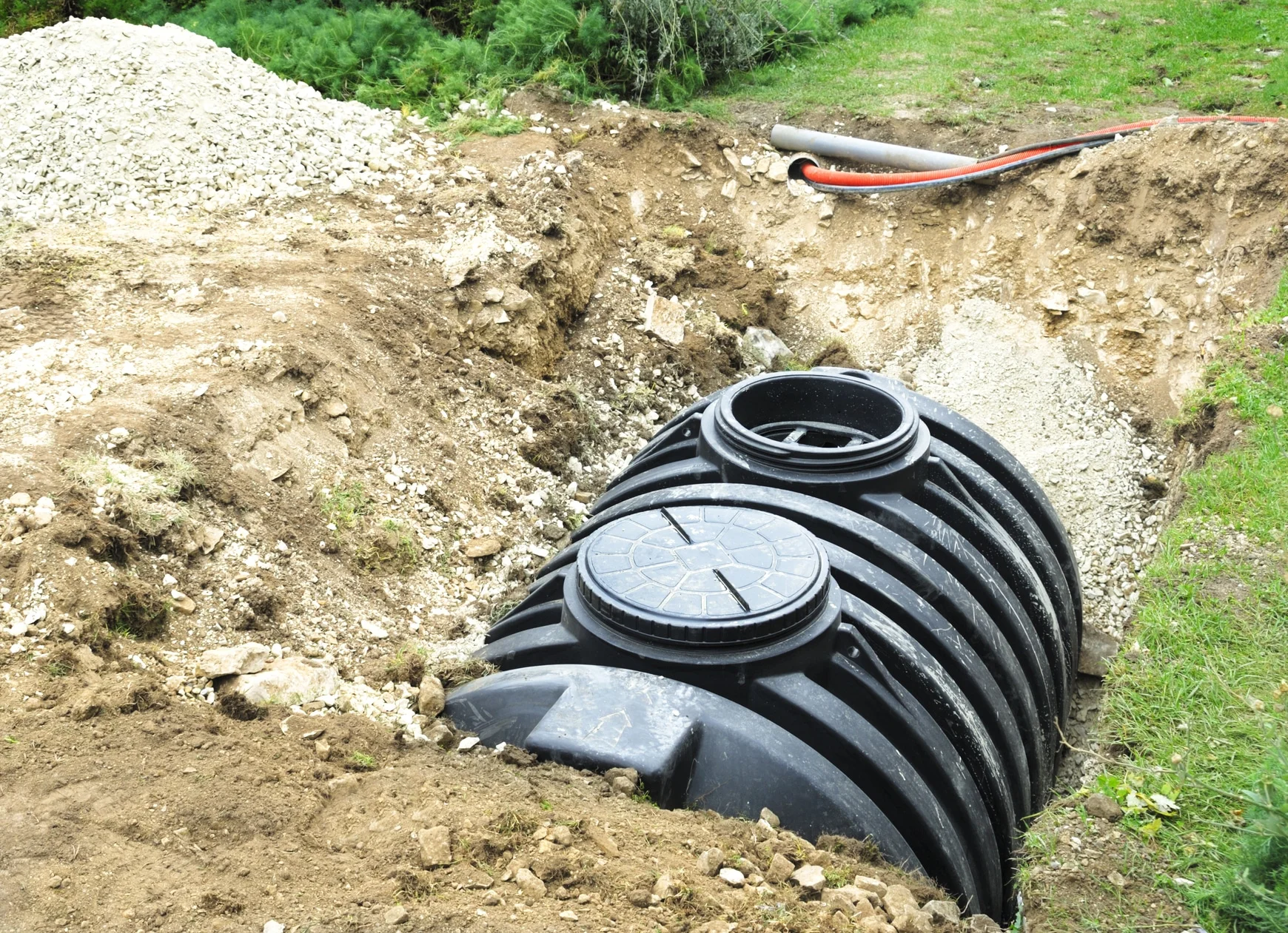
Septic Tanks in Michigan: Concrete vs. Plastic vs. Fiberglass
Tanks come in three common materials:
Concrete: Durable and heavy. Weight helps it stay put in high groundwater. It needs solid access for delivery and setting.
Plastic (poly): Lighter, easier to transport on tight sites. Needs proper anchoring in high water tables to prevent float.
Fiberglass: Light and strong, good for certain soil and groundwater conditions. Often chosen when access is tight and weight matters.
Material choice affects crane time, bedding, anchoring, and delivery. In West Michigan, we also think about frost depth and groundwater. We recommend what fits your soil and access, not what is sitting in a yard somewhere.
Drain Field Types Near the Lakeshore: Gravity, Pressure, Mound, and Alternative Systems
Your drain field is where the treated wastewater returns to the soil. Options include:
Gravity distribution: Fewer parts, often lower upfront cost, but only feasible on sites with suitable soils and slopes.
Pressure distribution: A small pump doses the field evenly. Better for uniform treatment in soils that need it.
Mound systems: Raised, engineered sand bed when soils are slow, groundwater is high, or there is shallow bedrock. More material and grading work.
Alternative systems: Media filters or aerobic units for special sites. These improve treatment but add components, power, and maintenance.
The drain field type is one of the top cost drivers. It affects excavation, sand and stone, distribution pipe, controls, and restoration.
Excavation, Grading, and Access: Why Site Prep Affects Cost
Excavation is where our team lives. The time and gear needed depend on more than the size of the system:
Access: Can we reach the work area with a dump truck or do we shuttle materials with smaller machines?
Clearing and stumps: Tree roots or old debris add hours.
Spoils: Where do we place the dirt we dig out? Will we haul it off site?
Tight lots: Working around patios, wells, or utilities takes more fine-grade time.
Groundwater and dewatering: High water tables can require pumps and careful trench support.
A clean site plan saves time. We lay mats to protect lawns when needed and keep a tidy work zone to avoid rework.
Plumbing Materials, Pumps, and Controls: What You’re Paying For
Beyond the tank and field, your system relies on practical parts that keep everything flowing:
Schedule-rated PVC for long-term durability
Effluent pumps sized to your system if pressure distribution is needed
Float switches and alarms to warn you if a pump stops
Control panels in weather-safe enclosures
Vent and inspection risers so service is simple and does not tear up the lawn
We prefer parts that are easy to source locally. If something ever needs service, you do not want a unicorn pump that takes two weeks to find.
Inspections, Backfill, and Final Restoration: The “Finish Line” Costs
After installation, the health department inspects the work. Then we backfill, compact, and shape grade so water flows away from the tank and field. We restore disturbed areas based on your preference:
Basic restoration: Final grade and seed.
Enhanced restoration: Topsoil import, sod, or bed rebuilding near landscaped areas
Driveway repairs if we crossed a gravel or asphalt lane.
Restoration can be modest or more polished depending on your plans for the yard.
Hidden or Often Missed Costs: Power, Landscaping, and Rocky Ground
These are the “whoops” items we try to prevent:
Electrical: Pressure systems need power to the panel. Running a new circuit or conduit adds cost.
Landscaping rebuild: Mature beds, fences, or patios that must be moved and reset.
Rock and buried debris: Old fill or rubble can slow trenching and require extra hauling.
Access improvements: Temporary stone for wet drives or mats to protect lawns.
We call these out early so you can plan, not react.
Season, Weather, and Timing in West Michigan: When to Schedule to Save
In our area, freeze and thaw affect both schedule and restoration. Early spring can be soft and muddy, which can mean more site protection and slower work. Summer and early fall are often ideal. Late fall can still be fine with the right plan. If you can schedule before the deep freeze, you often save on restoration time and protect your lawn from heavy ruts.
DIY vs. Hiring Pros: Safety, Liability, and Dollars and Sense
A septic system is not a weekend trench. It is a health system for your home. DIY can look cheaper until a tank floats, a trench collapses, or a field fails inspection. Then it gets costly fast. A licensed, insured installer understands soils, setback rules, shoring, compaction, pump sizing, and safe trench practice. You are paying for more than a hole and a tank. You are paying for a working, legal system that protects your family and your well.
How We Build a Clear, Written Estimate at Ryerson Brothers Excavating
We keep pricing transparent. Here is how we build it:
Site review and soil data: We study your perc results, groundwater notes, and setbacks.
Design scope: We match the system type to your soil and bedroom count.
Material takeoff: Tanks, pipe, fabric, stone, sand, pumps, panels, and risers.
Equipment and labor plan: Machines, trucking, haul-offs, and crew hours.
Permit and inspection: We list the expected fees and coordination.
Restoration options: Basic seeding or upgraded finish.
Contingencies: We call out any “ifs” so surprises do not blindside you.
You get a written estimate that is line-by-line clear. If something changes, we explain it before we move forward.
Our Step-by-Step Process: From First Call to Final Sign-Off
Discovery call: Goals, timeline, and what you already know about your soil.
On-site visit: Access check, stakes, and photos for the plan.
Perc test or records review: If you have results, great. If not, we help you schedule.
Design and permit: We coordinate with the county and submit a clean package.
Scheduling: We pick dates that fit weather and your life.
Install: Safe excavation, set tank, lay lines, set pumps and controls, and test.
Inspection: County review and sign-off.
Backfill and restoration: Grade, seed, and cleanup.
Owner walk-through: We show you risers, alarms, and care basics.
Closeout: Warranty and as-built notes for your records.
Smart Budget Tips for Homeowners Installing a Septic System
Start with soil data. Everything flows from it.
Decide on tank material early. It impacts access and set-up.
Protect the access path. Avoid scheduling heavy deliveries after heavy rains.
Think long-term. A pressure system that treats evenly may protect your field for years and save you money later.
Plan power. If a pump is required, make sure your panel can handle a new circuit.
Prioritize restoration. A little topsoil and seed now can save larger fixes later.
Keep records. Tank and field locations save headaches the next time you plan a patio or add a shed.
Local Proof: Why West Michigan Homes Need Local Experience
Homes near Ottawa County and the broader lakeshore deal with unique soils and water tables. We work in these conditions every week. That experience shows up in cleaner permits, fewer delays, tighter trenches, and systems that match the ground you own. We do not force one system on every site. We fit the system to your soil, slope, setbacks, and the way your family lives.
Next Steps: Free Site Look, Honest Advice, and a Transparent Path Forward
If you are staring at a set of plans and a lot of questions, you do not have to guess. We can walk the site, review your soil data, and give you a clear, written path from permits to plumbing. No fluff. No hidden items. Just a system that works, passes inspection, and protects your home for years.
Ryerson Brothers Excavating
Based in Muskegon County. Serving Muskegon, Oceana, Ottawa, and Newaygo Counties.
Let’s build your system the right way, the first time.