
Serving: Muskegon, Oceana, Ottawa, Newaygo Counties
New Blog Post
If you are reading this, there is a good chance something does not feel right at your home.
Maybe the yard smells off after rain.
Maybe the drains are slow no matter how careful you are.
Maybe you were hoping a simple septic repair would solve things, but deep down you are worried the drain field might be the real problem.
Most homeowners do not plan for drain field replacement. It usually shows up at the worst time, when budgets are tight and stress is already high. And if you live near Muskegon County , the soil, groundwater, and weather can make the situation even more confusing.
We see this every week at Ryerson Brothers Excavating. Homeowners near Muskegon County, Oceana County, Ottawa County, and Newaygo County, Michigan call us when they feel stuck, frustrated, or unsure who to trust.
Understanding Drain Field Failure near Muskegon County Homes
Your drain field does the quiet work of treating wastewater after it leaves the septic tank. When it works, you never think about it. When it fails, everything feels urgent.
Drain field failure often comes down to saturation. Heavy rains, seasonal groundwater changes, and soil that does not drain evenly all put stress on systems over time. Even a well-maintained septic tank cannot save a drain field that can no longer absorb and filter water.
Failure does not usually happen overnight. It builds slowly, often over years, until the system simply cannot keep up anymore.
Why Drain Fields Fail More Often near West Michigan
West Michigan has some unique challenges that many homeowners do not realize until problems start.
Clay-heavy soils slow drainage and trap moisture.
High water tables reduce the space needed for proper treatment.
Freeze and thaw cycles shift soil and damage older systems.
On top of that, many homes in this area were built decades ago with drain fields that were sized for smaller households and different usage patterns. Today, more laundry, more bathrooms, and heavier water use push those systems past their limits.
None of this means your system was installed poorly. It just means time and conditions have caught up.
Early Warning Signs Your Drain Field Is Reaching the End of Its Life
Most drain field failures give warning signs before things get severe.
Slow drains throughout the house
Gurgling sounds in plumbing
Standing water or soggy soil near the drain field
Strong sewage odors outside
Lush green grass in one specific area
If you notice more than one of these, it is time to stop guessing and start investigating. Waiting usually limits your options and increases costs.
What Happens If You Delay Drain Field Replacement Too Long
It is normal to hope the problem goes away. Unfortunately, drain fields do not heal themselves.
Delaying replacement can lead to sewage backing up into the home, contamination of groundwater, and damage to nearby wells or surface water. In some cases, health departments may step in and restrict use of the system altogether.
From a cost perspective, delay often means more excavation, emergency work, and yard damage. Planning ahead almost always gives homeowners more control and better outcomes.
Drain Field Repair vs Drain Field Replacement: Which Makes Sense
This is one of the first questions homeowners ask, and it is a fair one.
Repairs can help when the issue is isolated, such as a damaged pipe or distribution box. Replacement becomes necessary when the soil itself can no longer absorb wastewater.
In our experience, repeated repairs on a failing drain field usually cost more in the long run than addressing the root problem early. A proper evaluation is the only way to know which path makes sense for your property.
How Soil Conditions Affect Drain Field Replacement near Muskegon County, Michigan
Soil determines almost everything about how a drain field is designed.
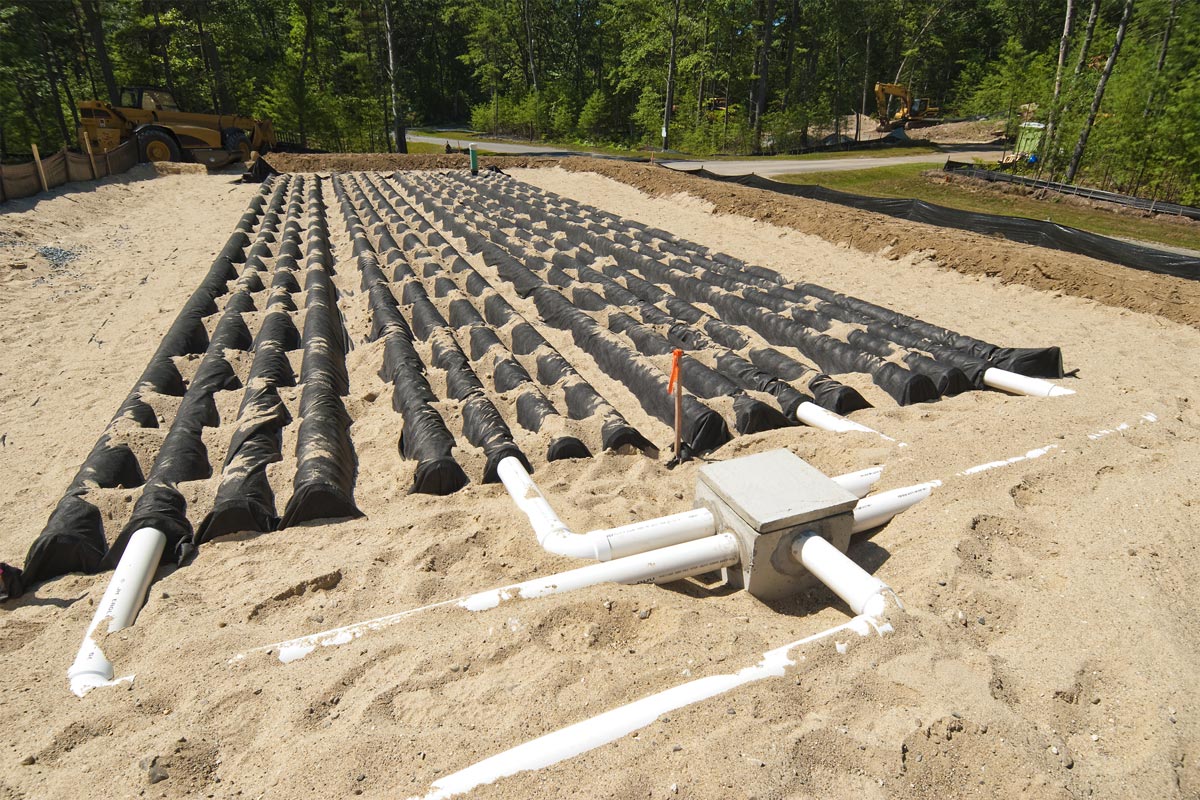
Percolation rates, depth to groundwater, and soil composition all influence layout and size. Drain field replacement near Muskegon County, this means systems often need careful placement and sometimes relocation to meet current standards.
This is where local experience matters. Understanding how land behaves in this region helps prevent future failures and unnecessary rework.
The Drain Field Replacement Process Explained Step by Step
Many homeowners feel anxious because they do not know what the process looks like. Here is a simplified overview.
First comes evaluation and testing.
Then design and permitting.
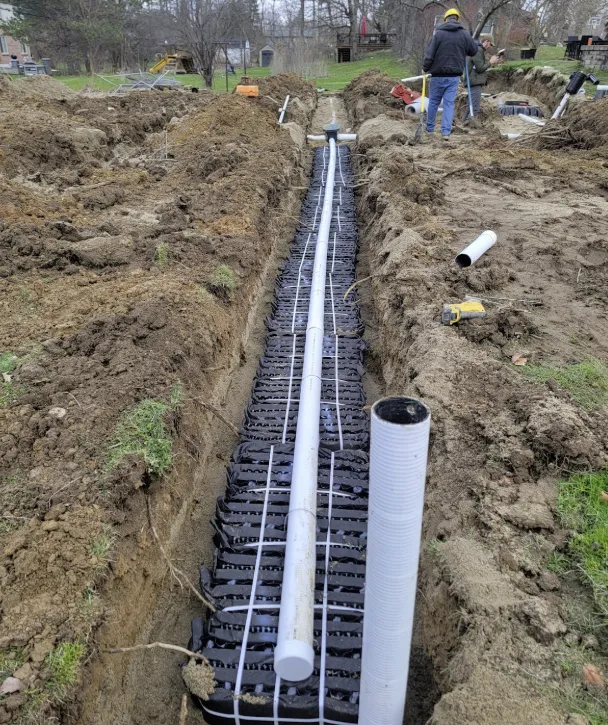
Next is excavation and removal of old components.
New materials are installed and connected.
Final inspections are completed.
Clear communication during each phase reduces surprises and keeps timelines realistic.
How Long Drain Field Replacement Takes From Start to Finish
The actual excavation work may only take a few days, but the full process can take several weeks.
Permitting and approvals depend on county schedules. Weather can also play a role, especially during wet seasons. Planning ahead allows the work to fit smoothly into your schedule instead of feeling rushed.
What Determines the Cost of Drain Field Replacement near Muskegon County, Michigan
Every property is different, but several factors influence overall cost.
Soil conditions
System size and design
Accessibility for equipment
Permit requirements
Land restoration needs
The biggest cost driver is usually soil. Difficult drainage conditions require more space, materials, and planning.
Common Drain Field Replacement Mistakes Homeowners Should Avoid
One common mistake is choosing based on price alone. Another is assuming all systems are the same.
Skipping soil testing, ignoring permits, or working with contractors unfamiliar with local regulations can lead to costly corrections later. A good plan up front saves stress and protects your investment.
How Drain Field Replacement Impacts Your Yard and Landscaping
This is a big concern for homeowners, and understandably so.
Excavation does disturb the area, but thoughtful planning minimizes damage. Access routes, stockpiling soil, and restoration plans all matter.
Our goal is always to leave properties functional, stable, and ready for regrowth, not torn up longer than necessary.
Permits, Inspections, and Local Regulations You Should Know About
Drain field replacement is regulated for a reason. Proper permits protect homeowners and the environment near Muskegon County and surrounding areas; inspections ensure systems meet modern standards. While paperwork can feel frustrating, it is also your safeguard against future problems.
How to Choose the Right Drain Field Replacement Contractor
This decision matters more than most homeowners realize.
Look for experience with local soil conditions.
Ask how systems are designed, not just installed.
Make sure communication is clear and realistic.
At Ryerson Brothers Excavating, we focus on understanding each property and homeowner before recommending solutions. Customization is not a buzzword for us. It is how good work gets done.
Questions Smart Homeowners near Muskegon County Ask Before Drain Field Replacement
Good questions lead to good outcomes.
How long will the system last
What maintenance is required
How will this affect future property use
What happens if conditions change
A contractor should welcome these questions, not rush past them.
How Proper Installation Extends the Life of Your New Drain Field
Installation quality matters as much as materials.
Correct depth, spacing, slope, and soil protection all extend system life. Cutting corners during installation shortens it. A well-installed drain field can serve a home reliably for decades.
What to Expect After Drain Field Replacement Is Complete
Once the system is active, things should feel normal again. Drains flow properly. Odors disappear. The yard begins to recover.
Following recommended usage and maintenance guidelines helps protect your investment and avoid future issues.
How Drain Field Replacement Protects Your Home’s Value
A failing septic system is a major red flag during property sales. Replacing the drain field restores confidence and removes uncertainty.
It also protects nearby water sources and keeps your home compliant with local health requirements.
A Local Perspective on Drain Field Replacement near Muskegon, Michigan
We are not a massive firm, and that works in our clients’ favor. At Ryerson Brothers Excavating, we serve Muskegon, Oceana, Ottawa, and Newaygo Counties with a focus on clear communication and tailored solutions.
Drain field replacement is not just a construction project. It is a moment when homeowners need clarity, honesty, and steady guidance. Our role is to help you understand what is happening beneath your property and how to fix it the right way.
If you are facing drain field concerns, you are not alone. And with the right plan, it does not have to feel overwhelming.
When you are ready to talk through your options, we are here to help you make sense of it all.